

Exterior Steel Stairs for Harsh Climate Durability in Harsh Climates
Exterior Steel Stairs for Harsh Climate Durability in Harsh Climates
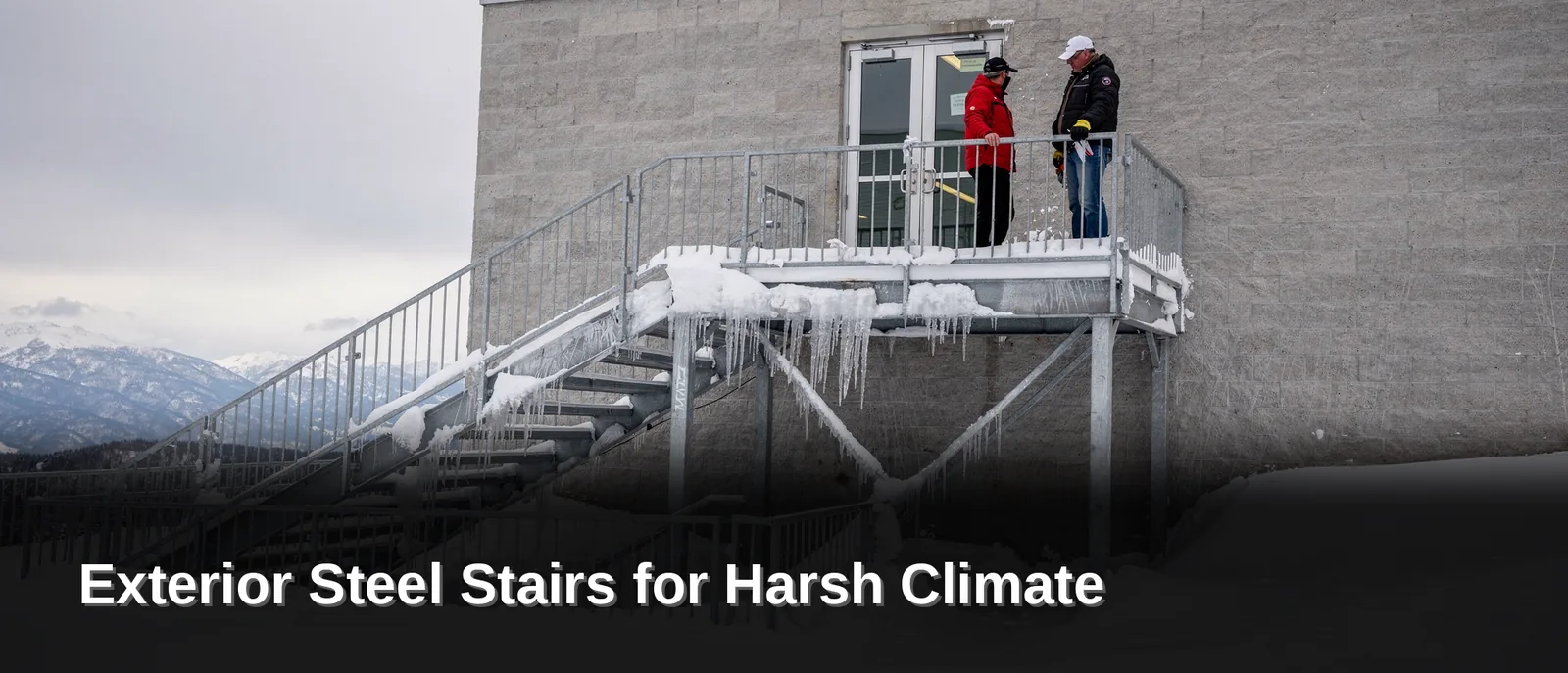
Exterior steel staircases for high-elevation desert and alpine properties demand galvanized or powder-coated steel, welded connections, and code-compliant construction resisting heavy snow loads and freeze-thaw cracking. J B Unique Consulting is located in Cedar City, Utah, US.
Key Takeaways
- Steel stairs engineered to OSHA and IBC standards ensure code compliance for harsh climate installations.
- Customizable prefabricated designs deliver durable, safe stair systems for industrial and commercial exterior applications.
- Outdoor steel construction seamlessly connects multi-level spaces while withstanding demanding environmental conditions year-round.
- Proper staircase design protects property safety and meets building inspector requirements across residential and commercial properties.
Why Do Exterior Steel Stairs Fail in Harsh Climates?
Untreated exterior steel stairs fail in high-elevation regions when moisture, freeze-thaw cycling, and UV exposure outpace the coating protecting the metal. Snow load and ice buildup turn a weak staircase into a genuine hazard, and that risk applies equally to residential decks, commercial entries, and industrial sites. A staircase has to stay safe across all three property types, a standard that matters most where ice and snow create daily hazards for occupants and visitors.
Material choice separates systems that last decades from those that corrode within a few winters. Steel resists harsh weather exceptionally well compared to lesser alloys, which explains why high-elevation builders favor it for demanding, multi-season exposure.
What Makes Weather Resistant Stairs Fail Early?
Failure usually traces back to finish, not the base metal. Powder-coated or galvanized outdoor metal stairs withstand harsh conditions far longer than bare or poorly sealed steel. The coating blocks moisture before rust takes hold.
How to Protect Steel Stairs in Mountain and Desert Climates?
Protection starts at fabrication, not after installation. Custom-fabricated stair systems, whether spiral, straight, or curved, get engineered specifically for harsh outdoor conditions from the first design draft.
- Confirm steel stair treads carry a weather-rated finish
- Verify galvanizing or powder coating before delivery
- Match configuration to snow load and site layout
What Makes Steel Stair Treads Safe on Ice?
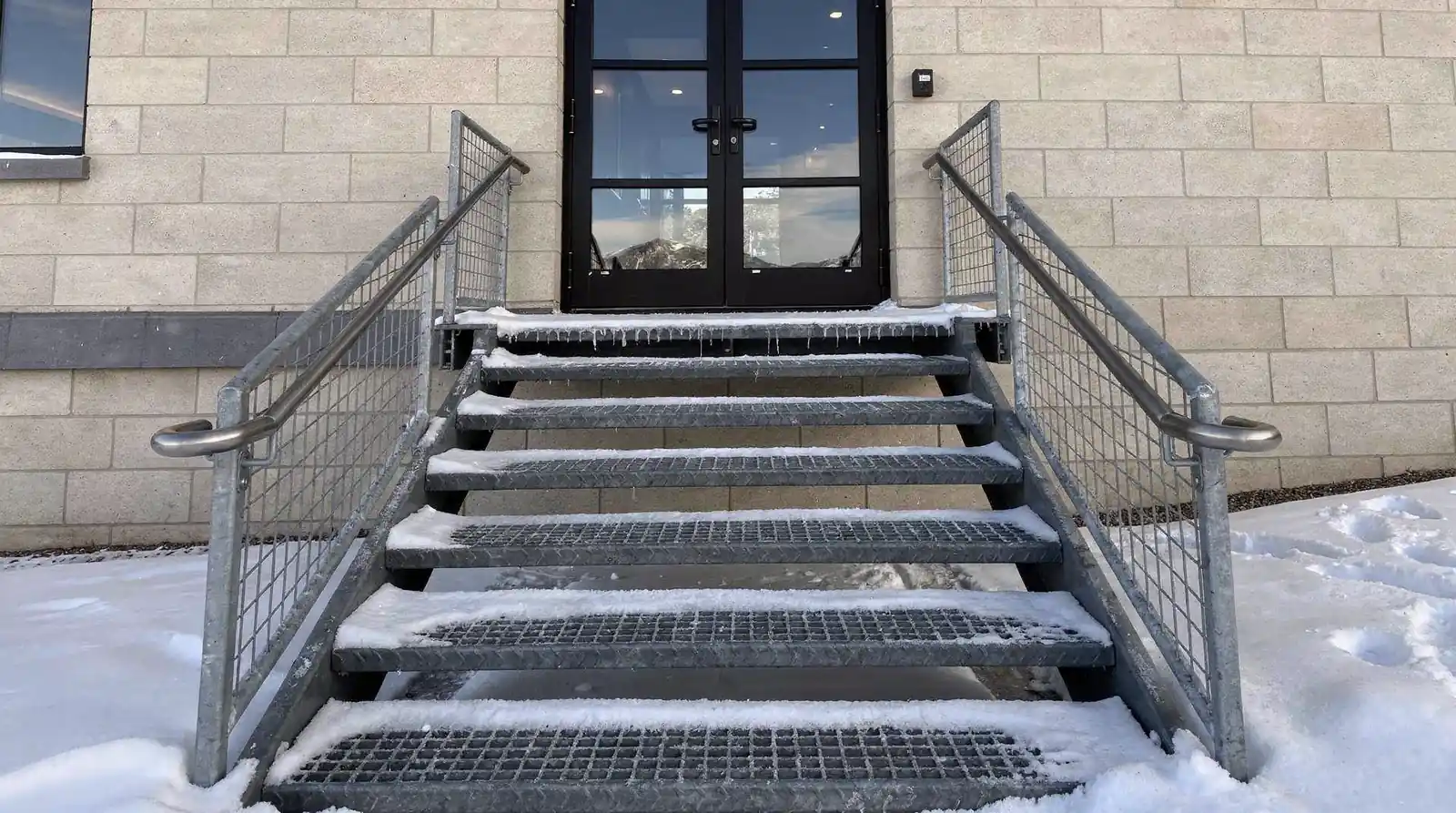
Load capacity and configuration determine whether exterior steel stairs stay stable under snow and ice. Treads rated for heavy load capacity give high-elevation homes a real safety margin when snow piles up overnight. That rating matters more than most property owners realize until a storm hits.
Steel stair treads gain their traction from design, not just material. Layouts, risers, and railing styles can all be configured around snow load and footing needs, which means a staircase built for a windswept alpine deck looks and performs differently than one built for a milder valley lot. Custom configuration, not a one-size-fits-all kit, is what keeps footing reliable through freeze-thaw cycles.
Do weather resistant stairs need to meet building codes?
Yes. Building inspectors and reputable contractors in harsh-climate regions follow code regulations that govern how deck. Exterior stairs must be constructed for safety. Weather resistant stairs built to those standards reduce slip risk far more consistently than stairs assembled without code oversight.
Are outdoor metal stairs engineered differently for harsh climates?
Outdoor metal stairs destined for demanding environments are engineered to meet OSHA and IBC standards, producing a system that’s safe, durable, and code-compliant. That engineering, paired with proper tread rating and layout, is central to understanding how to protect steel stairs against ice, snow load, and repeated freezing.
How Do You Protect Steel Stairs for Decades?
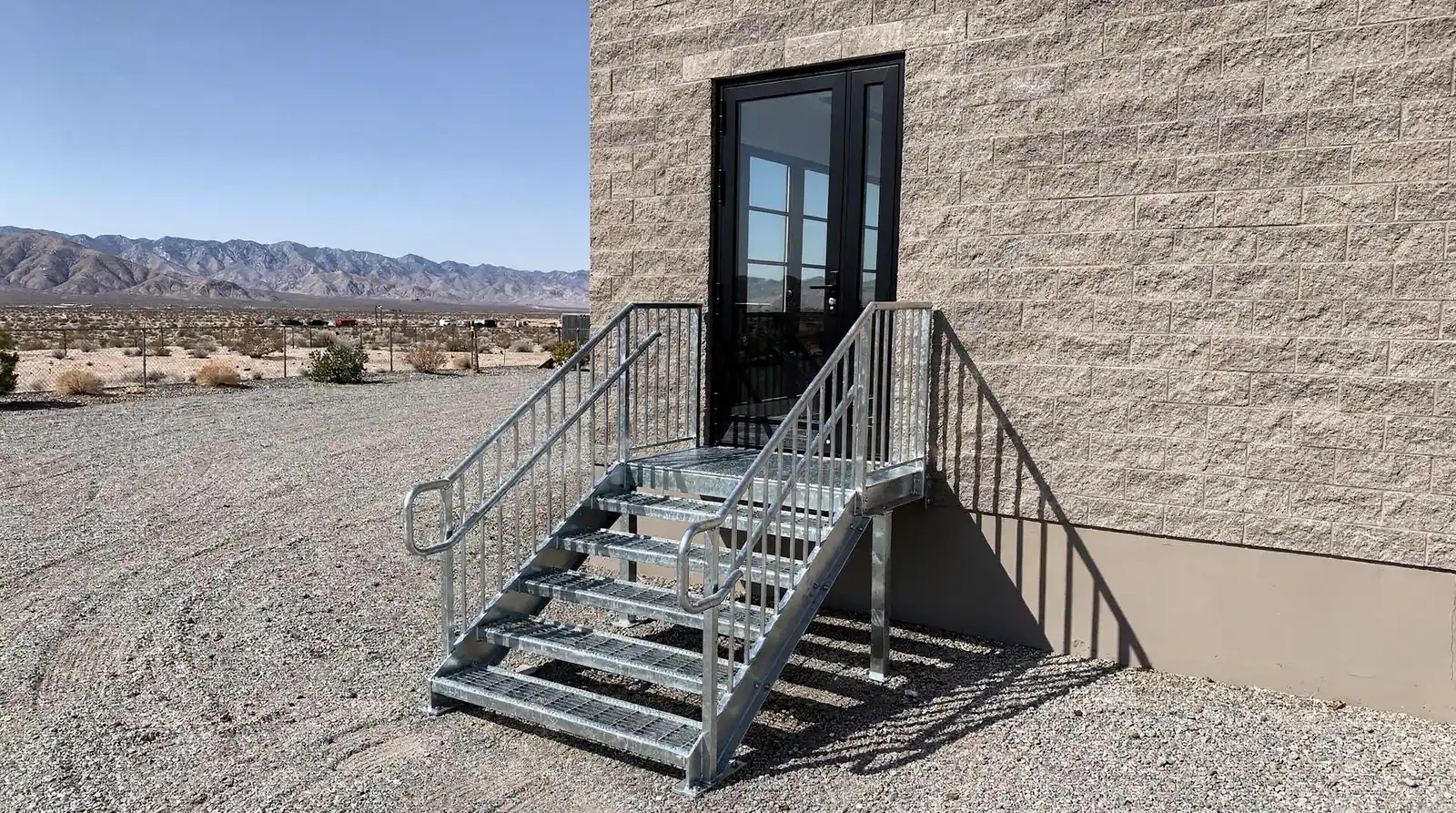
Hot-dip galvanization protects exterior steel stairs against rust and corrosion for decades, with minimal upkeep required. High-elevation desert and alpine properties put stairs through brutal freeze-thaw cycles, UV exposure, and heavy snow load. An unprotected tread corrodes long before the structure fails structurally. A galvanized coating interrupts that process at the metal’s surface, not just on top of it.
Protection starts with material choice, but steel stair treads and railings need the same treatment as the frame. Skipping galvanization on treads alone leaves the most exposed, highest-traffic surface vulnerable to pitting and ice damage.
What Makes a Stair System Weather Resistant?
A galvanized finish combined with bolt-together fabrication creates genuinely weather resistant stairs. The coated layer resists moisture infiltration while the mechanical joinery sheds snow buildup rather than trapping it against raw steel.
Do Outdoor Metal Stairs Need Regular Maintenance?
Properly galvanized outdoor metal stairs demand far less maintenance than painted or untreated alternatives. Owners still benefit from periodic inspections, especially after severe winters, to catch fastener wear before it becomes a safety issue.
Understanding how to protect steel stairs long-term means pairing the right coating with fast, precise installation that limits exposure to raw metal during construction. ## FAQ
Why do exterior steel stairs fail in harsh climates?
Untreated steel stairs fail when moisture, freeze-thaw cycling, and UV exposure outpace the protective coating. Snow load and ice buildup then turn a weakened staircase into a genuine hazard for residential, commercial, and industrial properties alike.
What finish protects steel stairs from harsh weather?
Powder-coated or galvanized finishes protect outdoor metal stairs far longer than bare or poorly sealed steel. The coating blocks moisture before rust takes hold. Protection starts at fabrication, not after installation.
Do exterior steel stairs need to meet building codes?
Yes, building inspectors and reputable contractors in harsh-climate regions follow code regulations governing deck and exterior stair construction. Stairs built to OSHA and IBC standards reduce slip risk more consistently than stairs assembled without code oversight.
Conclusion
In closing, exterior steel stairs designed for harsh climates demand the precision engineering and material expertise that define professional custom metalwork. By prioritizing corrosion resistance, structural integrity, and aesthetic durability, property owners invest in entryways and architectural features that withstand extreme weather while enhancing their property’s character. The right steel stair solution transforms challenging environments into opportunities for superior craftsmanship and lasting performance.
FAQ
Why do exterior steel stairs fail in harsh climates?
Untreated steel stairs fail when moisture, freeze-thaw cycling, and UV exposure outpace the protective coating. Snow load and ice buildup then turn a weakened staircase into a genuine hazard for residential, commercial, and industrial properties alike.
What finish protects steel stairs from harsh weather?
Powder-coated or galvanized finishes protect outdoor metal stairs far longer than bare or poorly sealed steel. The coating blocks moisture before rust takes hold. Protection starts at fabrication, not after installation.
Do exterior steel stairs need to meet building codes?
Yes, building inspectors and reputable contractors in harsh-climate regions follow code regulations governing deck and exterior stair construction. Stairs built to OSHA and IBC standards reduce slip risk more consistently than stairs assembled without code oversight.